UCT Summer School 2026 brings learning to life, underlining a campus of ideas
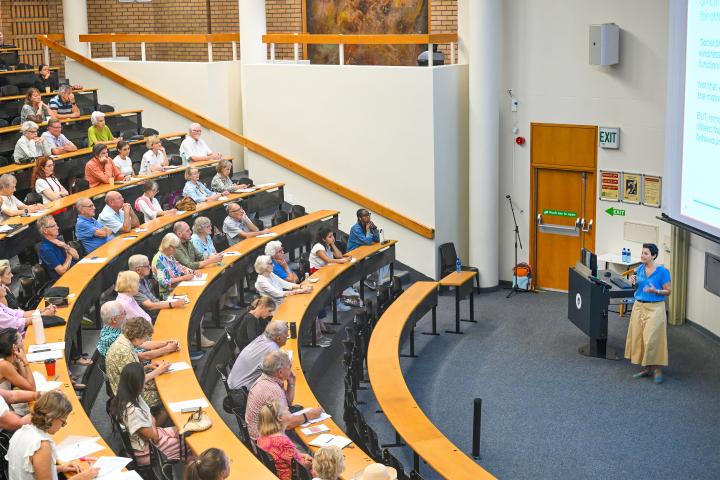
For more than seven decades, the UCT Summer School has transformed the University of Cape Town’s (UCT) campus into an energetic meeting place filled with ideas, debate, and critical discourse. The January 2026 edition was no exception, once again reaffirming UCT Summer School’s role as one of South Africa’s most accessible and enduring public higher education platforms.
Over the course of the programme, 2 131 attendees took part in 120 courses, lectures, tours and panel discussions, reflecting both the scale of the initiative and the appetite for lifelong learning across disciplines, generations and communities.
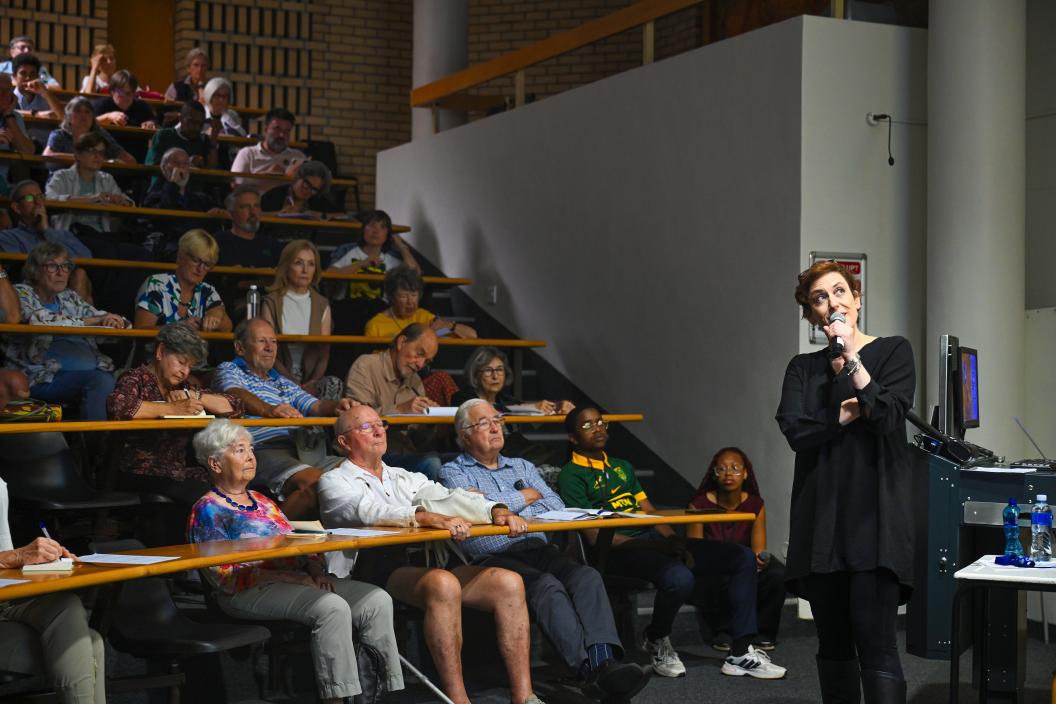
Media trainer, war correspondent, and CEO of Newshound Media Internation and Newshound Academy, Paula Slier, presenting her lecture, Clickbait, Chaos and Credibility: How to Spot Fake News. (Photo: Larato Maduna)
Participants included students, alumni, professionals, retirees, and members of the broader public, all drawn together by a shared curiosity and a willingness to engage critically with the world around them.
At the heart of Summer School remains its lecture programme, which spans the humanities, sciences, health, law, politics, culture, and the arts. Among the highlights this year was the Professor Bongani Mayosi Memorial Lecture, delivered by Professor Lehana Thabane of McMaster University in Canada. The lecture reflected deeply on Professor Mayosi’s legacy and the enduring relevance of his values — equality, social justice, transformation and excellence — within both academia and society more broadly
In an era marked by polarisation and incivility, the lecture underscored the importance of intellectual rigour anchored in humanity, compassion and ethical leadership.
Beyond individual lectures, the strength of the Summer School programme lies in its ability to create sustained conversations. Courses unfolded over several days, allowing participants to explore complex subjects in depth, question assumptions and engage directly with leading scholars and practitioners.
This format continues to distinguish Summer School from conventional public lectures, fostering dialogue rather than passive knowledge consumption.
Importantly, Summer School is not confined to lecture theatres alone. Guided tours — both on campus and across Cape Town — formed a vital part of the 2026 programme, offering participants experiential learning opportunities that connected theory to place. From architectural and historical walks to explorations of art, heritage and the natural environment, these tours enriched the academic offering and highlighted UCT’s location as a living classroom.
Reflecting on the 2026 programme, long-standing Summer School contributor Charles McGregor emphasised the distinctive intellectual and ethical spirit that defines the initiative. Drawing on his reflections on the Professor Bongani Mayosi Memorial Lecture, McGregor pointed to a tradition of scholarship in which academic excellence is inseparable from humanity and social responsibility.
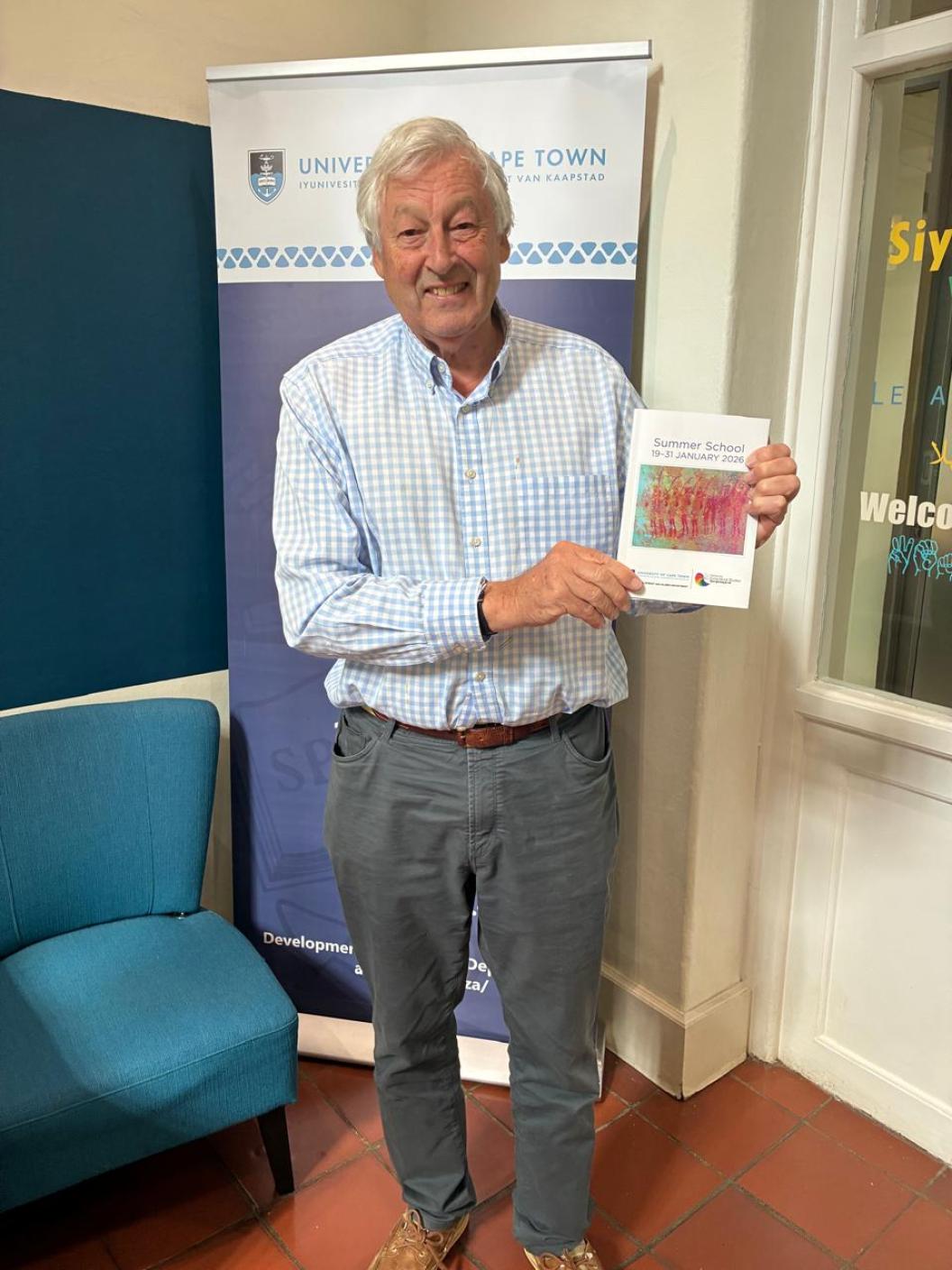
UCT alumnus, and longstanding friend, contributor and attendee of the UCT Summer School, Charles McGregor.
He reflected on Professor Mayosi’s enduring influence, noting that his legacy lives on in “the people he shaped, the communities he served, and the standard he set for how excellence must always walk alongside kindness."
Observing the audience gathered for the Memorial Lecture, he remarked that “one sensed that the vision of the University and indeed of Professor Mayosi is being realised”, with those present reflecting “the wider community and University we live in in our South Africa today”
McGregor also drew attention to the moral dimension of learning, echoing a central theme from the evening when he noted that the life of Professor Mayosi stands as proof that “humanity is not declared, but it is demonstrated," a reminder, he suggested, of the responsibility that accompanies knowledge and public scholarship.
The commitment to engaged citizenship was reflected powerfully in Advocate Geoff Budlender’s lecture on The State of the Rule of Law. Drawing on decades of legal experience, Budlender examined the constitutional principle of the rule of law as a cornerstone of South Africa’s democracy, highlighting the critical role of the courts in ensuring that public power is exercised lawfully, accountably and in good faith. He noted that while South Africa’s judiciary has undergone substantial demographic and institutional transformation since 1994, ongoing vigilance is required to ensure excellence, independence and public confidence in the justice system.
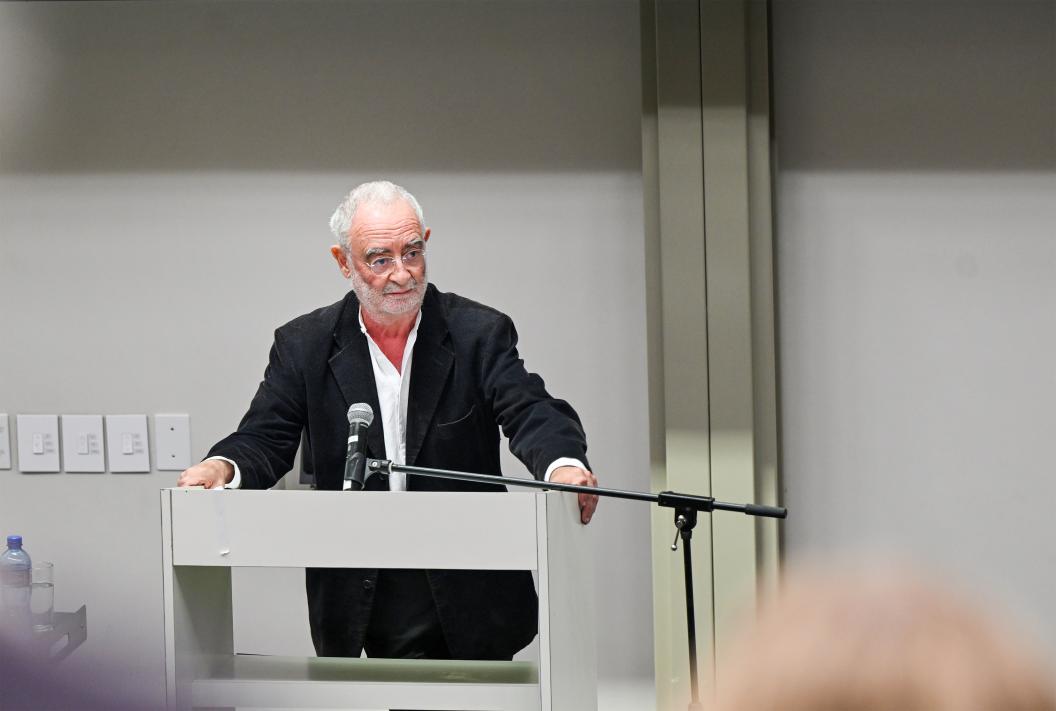
Advocate Geoff Budlender delivers the UCT Distinguished Alumni Lecture, The State of the Rule of Law at the 2026 UCT Summer School. (Photo: Larato Maduna)
Budlender also reflected on the resilience of South Africa’s courts in the face of sustained political and institutional pressure, particularly during periods of state capture. He emphasised that the judiciary’s consistent commitment to constitutional principles has been central to safeguarding democracy, even as challenges related to access to justice, administrative capacity and compliance with court orders persist. His lecture resonated strongly with Summer School’s broader ethos: that democratic values are sustained not only through law and institutions, but through informed public participation and critical engagement.
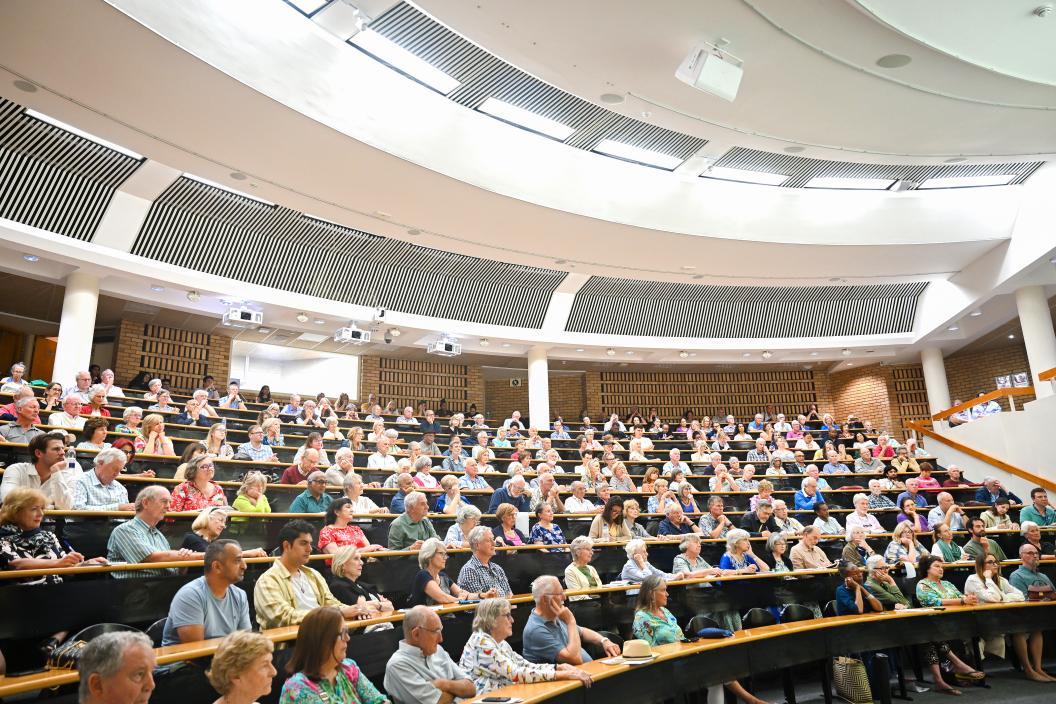
A packed house for the Geoff Budlender distinguished lecture. (Photo: Larato Maduna)
Summer School continues to demonstrate that universities serve society best when knowledge is made accessible, inclusive and responsive to real-world challenges, according to McGregor.
As UCT looks ahead, Summer School 2026 serves as one of the strong testaments to the University’s commitment to public engagement and lifelong learning. In bringing together thousands of participants across disciplines and experiences, it once again affirmed that meaningful education does not end with a degree — it evolves through dialogue, curiosity, and shared inquiry.